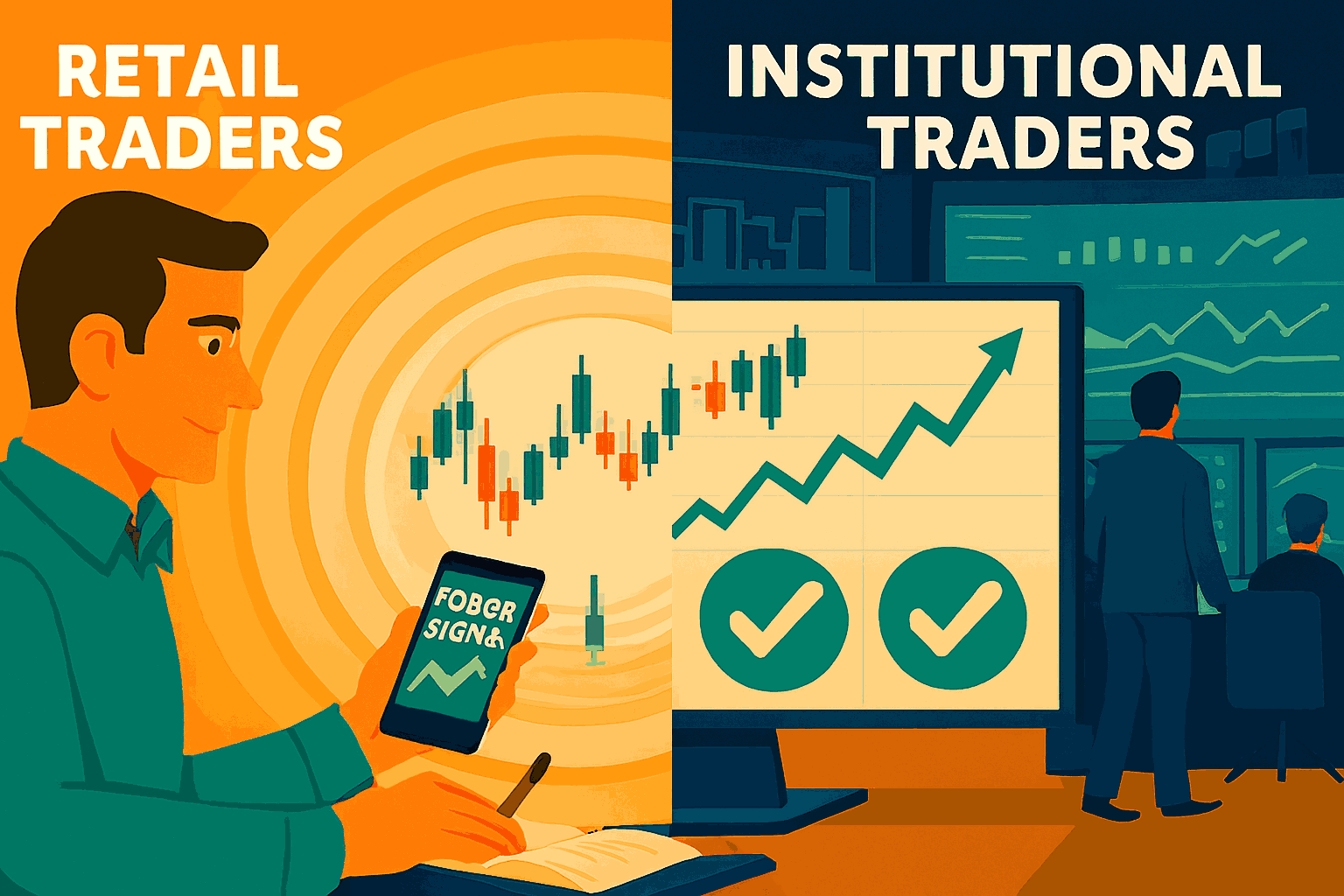
Retail signal flows are becoming an increasingly discussed topic in the forex market, where the gap between retail traders and institutional traders is enormous. Retail traders account for only a small fraction of global trading volume, while institutions such as banks, hedge funds, and asset managers dominate daily liquidity. Still, with the rise of signal services, social trading, and retail automation, the impact of retail signal flows has become a topic of growing interest. One question is worth asking: Can retail signal flows influence institutional traders?
The Scale of Retail vs. Institutional Trading
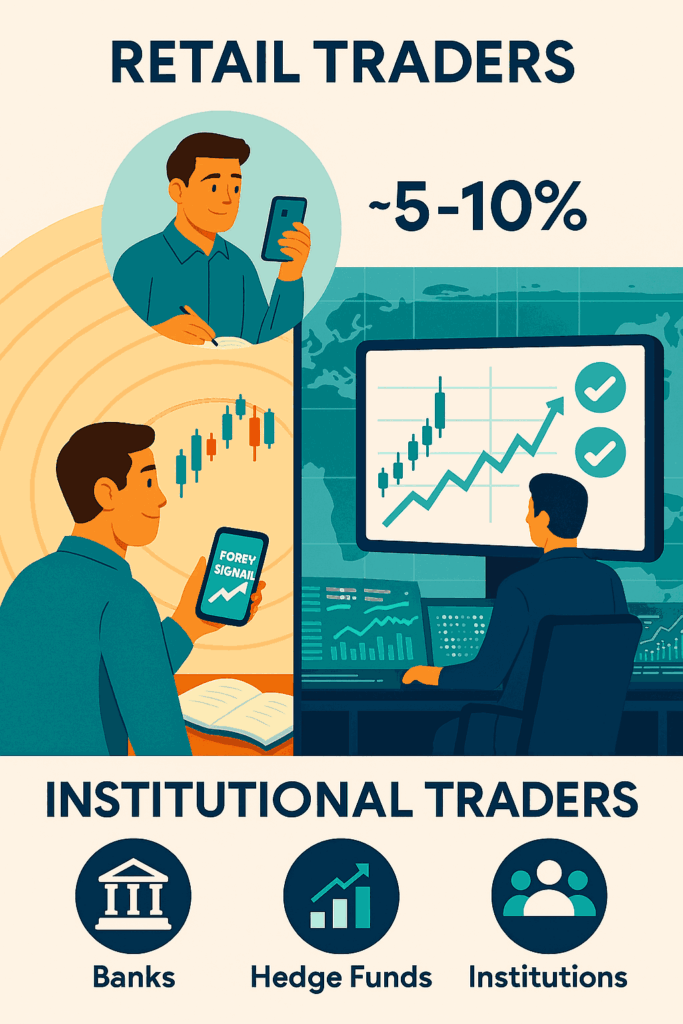
- Institutional traders account for an estimated 90–95% of forex volume daily. Their trades often involve hundreds of millions of dollars, executed across multiple venues with sophisticated algorithms.
- Retail flows, while growing, typically represent less than 10% of market volume. Even when thousands of traders follow the same signal, the combined order size is still small compared to institutional positions.
This means retail flows rarely move the market directly, but their activity does have indirect effects.
Where Retail Flows Can Have Impact
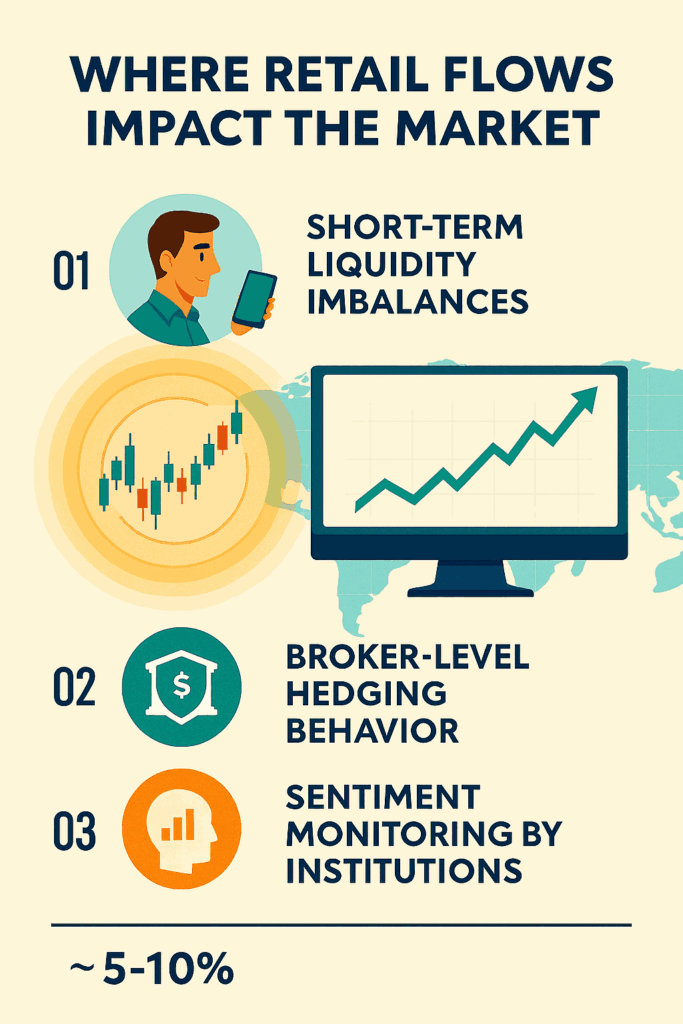
- Liquidity Pockets in Smaller Timeframes
On shorter timeframes (like the 1-minute or 5-minute chart), a surge of retail traders entering the market due to a widely shared signal can create temporary liquidity imbalances. Institutions may notice these and exploit them by fading retail momentum. - Broker-Level Impact
Many retail brokers operate under a B-book model, meaning they internalize trades instead of sending them to the interbank market. If retail traders pile into one direction, brokers or liquidity providers may hedge those flows in the broader market, indirectly creating small institutional reactions. - Sentiment Indicators
Some institutional traders monitor retail positioning data (such as the CFTC’s Commitment of Traders report or broker sentiment indices). While they don’t copy retail flows, they may use them as a contrarian indicator, since retail crowds often lean against the prevailing trend.
Why Institutional Traders Are Rarely Affected Directly
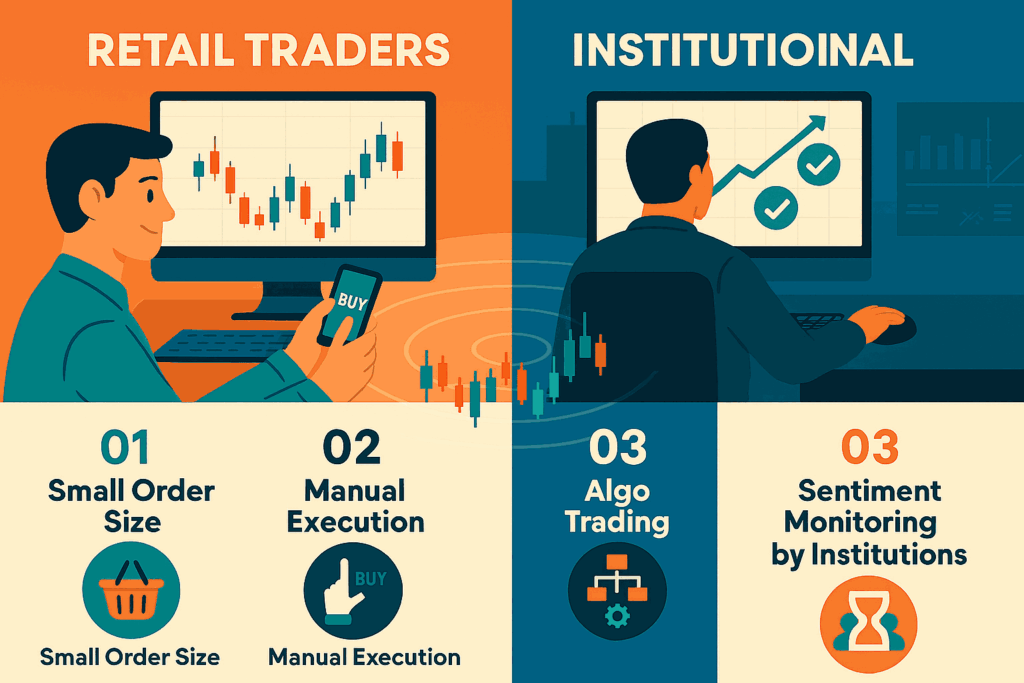
- Depth of Orders – A retail signal-driven order worth $1 million is tiny compared to a bank moving $500 million.
- Execution Technology – Institutions use algorithms that slice trades to minimize slippage and absorb retail orders seamlessly.
- Different Objectives – Retail signals focus on short-term setups, while institutional strategies may span weeks or months, making retail entries almost invisible in the bigger picture.
Case Study: Retail Surge During a Major News Event
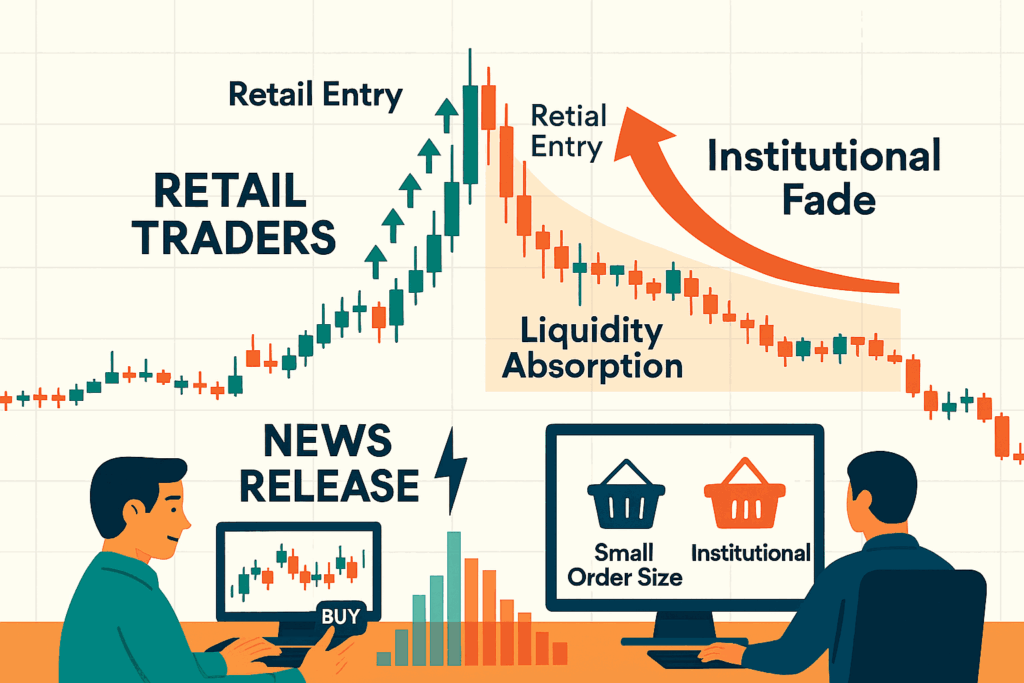
When retail signal providers broadcast a buy signal on EUR/USD right after a U.S. Non-Farm Payroll release, thousands of traders may enter at once. On the chart, this might create a brief spike, but within minutes, institutional players absorb the flow and push the price according to broader fundamentals. The retail impact is felt only in the initial microstructure of the move, not in the lasting trend.
Final Word
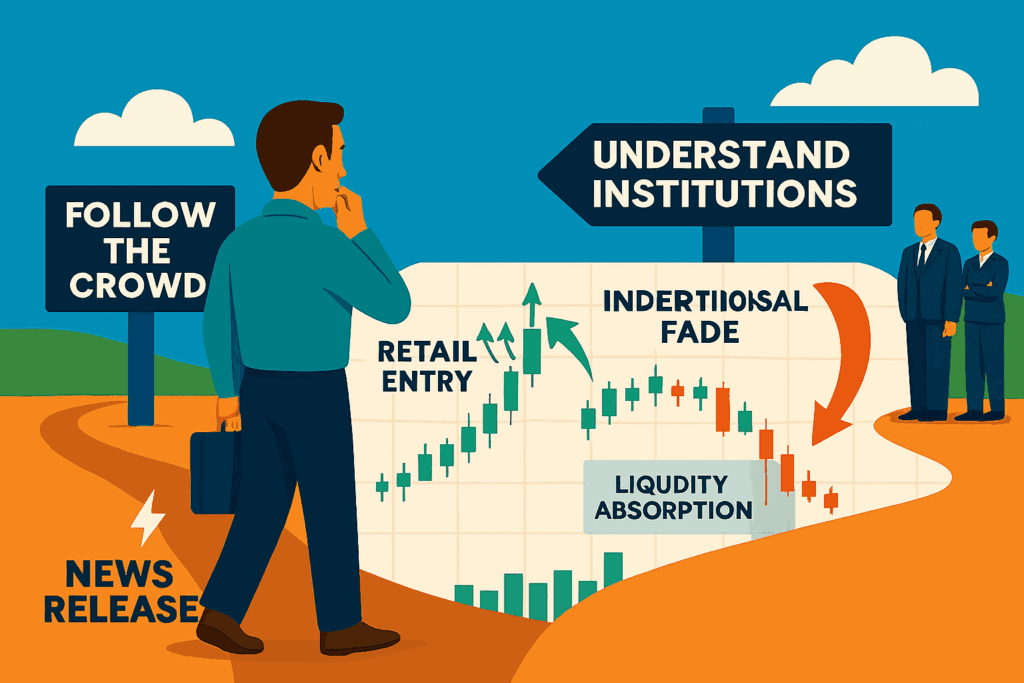
While retail signal flows don’t shift institutional trading decisions, they can create short-lived opportunities in micro timeframes. Institutional traders are aware of retail behavior but view it more as a source of liquidity than as competition.
For retail traders, the takeaway is clear: signals can help you navigate volatility, but don’t assume that following them en masse will move the market against the big players. Instead, learn how institutions react to retail flows and position yourself accordingly.