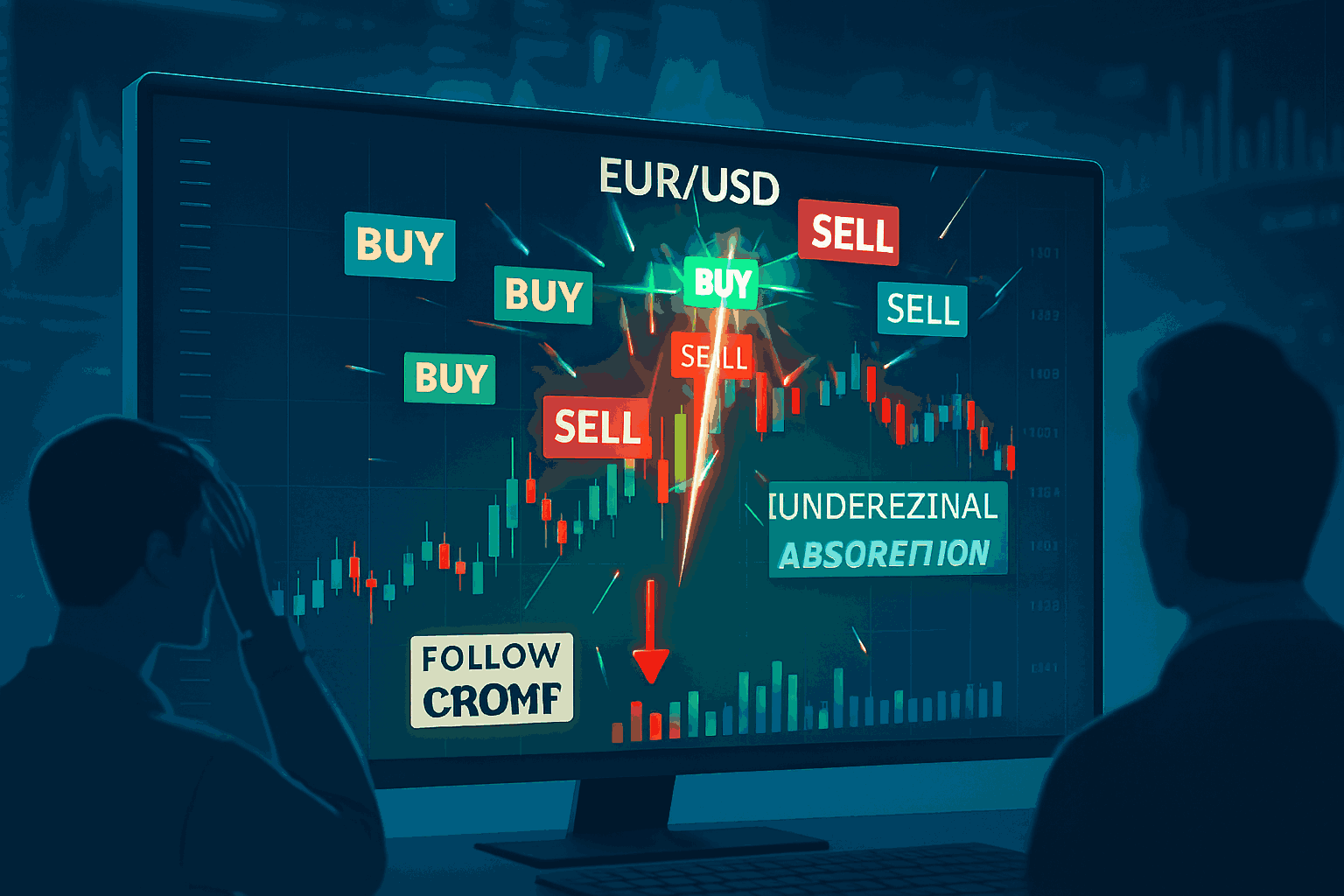
In forex trading, signals are usually evaluated one at a time. But what happens when multiple signals sometimes from different providers or strategies line up in rapid succession? These so-called signal clusters can generate powerful short-term movements, and the market reaction to consecutive signal clusters often catches both retail and institutional traders off guard.
This case study examines how the market reacts when consecutive signals cluster together, creating an amplified chain of buying or selling pressure.
What Are Signal Clusters?
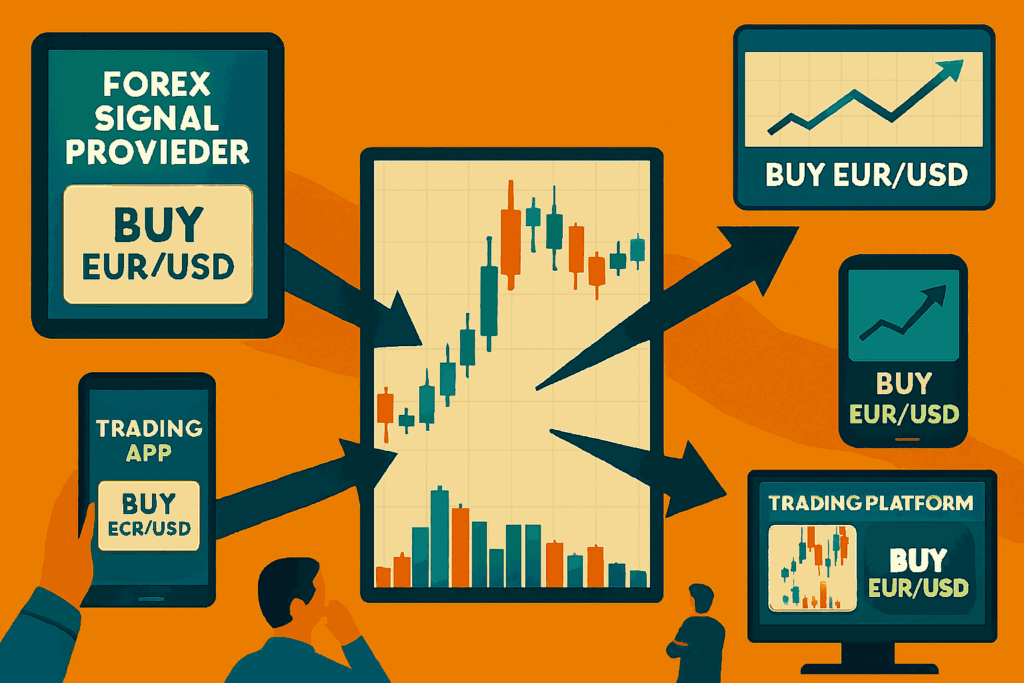
A signal cluster occurs when:
- Several providers issue a signal on the same currency pair in a short timeframe.
- Multiple technical or algorithmic systems confirm similar trade directions.
- Traders across platforms receive alerts that reinforce one another.
For example, three different providers may issue a “Buy EUR/USD” signal within 15 minutes of each other. Even if each signal has a small individual impact, the combined effect creates momentum.
Case Example: EUR/USD During an ECB Meeting Week
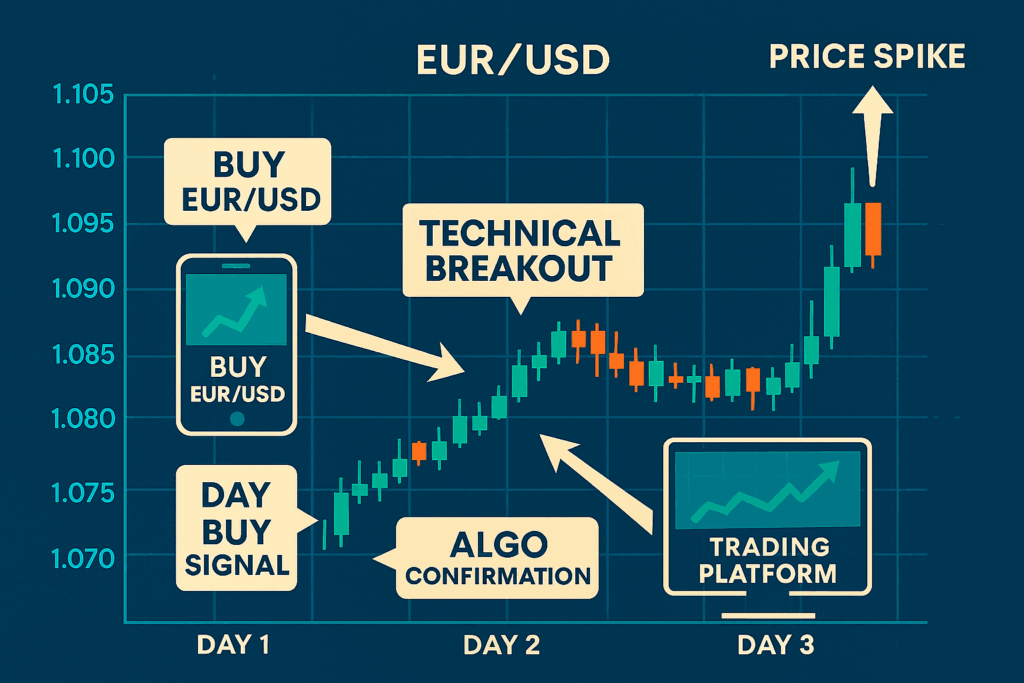
- Day 1: A signal provider issues a buy signal on EUR/USD after dovish U.S. data.
- Day 2: A second service confirms a buy entry based on technical breakouts.
- Day 3: A third algorithmic signal triggers, highlighting the same setup.
Within 48 hours, three consecutive signals aligned. Retail traders piled in, and short-term momentum built quickly.
Market reaction:
- EUR/USD surged nearly 70 pips intraday.
- Liquidity gaps formed as clustered retail demand pushed price higher.
- Institutional traders noticed the crowded positioning and later faded the move, triggering a reversal once weaker hands were in.
Why Signal Clusters Amplify Impact
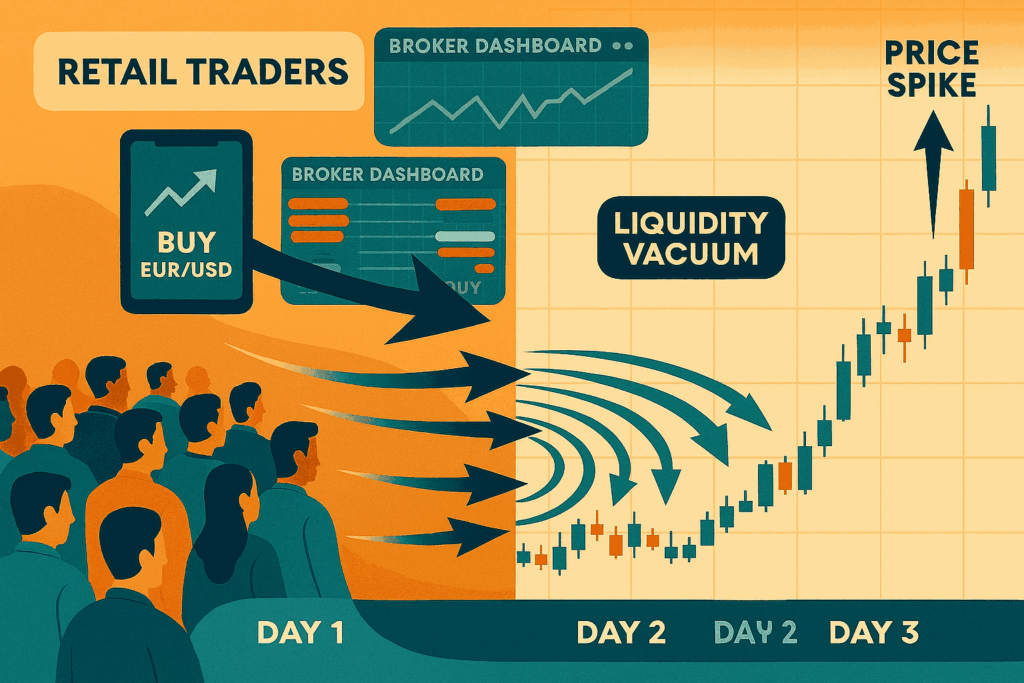
- Psychological Reinforcement – When traders see the same idea multiple times, confidence grows. Even skeptical traders join in.
- Liquidity Drain – Clusters push large groups of retail traders into the same direction, creating mini liquidity vacuums.
- Broker Hedging – If many retail traders go long, brokers and liquidity providers may hedge in the interbank market, creating further price pressure.
Short-Term vs Long-Term Effects
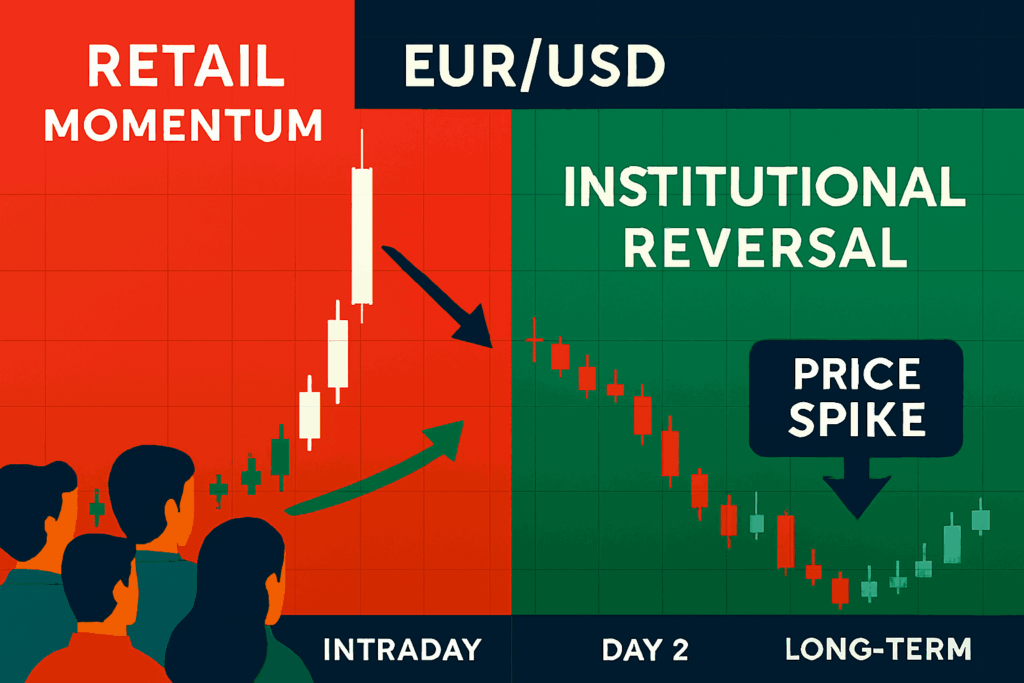
- Short-Term: Consecutive clusters often cause sharp intraday moves, particularly in liquid pairs like EUR/USD and GBP/USD.
- Medium-Term: Institutions typically exploit clusters by waiting for exhaustion. They fade retail-driven momentum, regaining control of direction.
- Long-Term: Clusters rarely alter macro trends. They are more about market noise and short-lived volatility than trend shifts.
Key Lessons for Traders
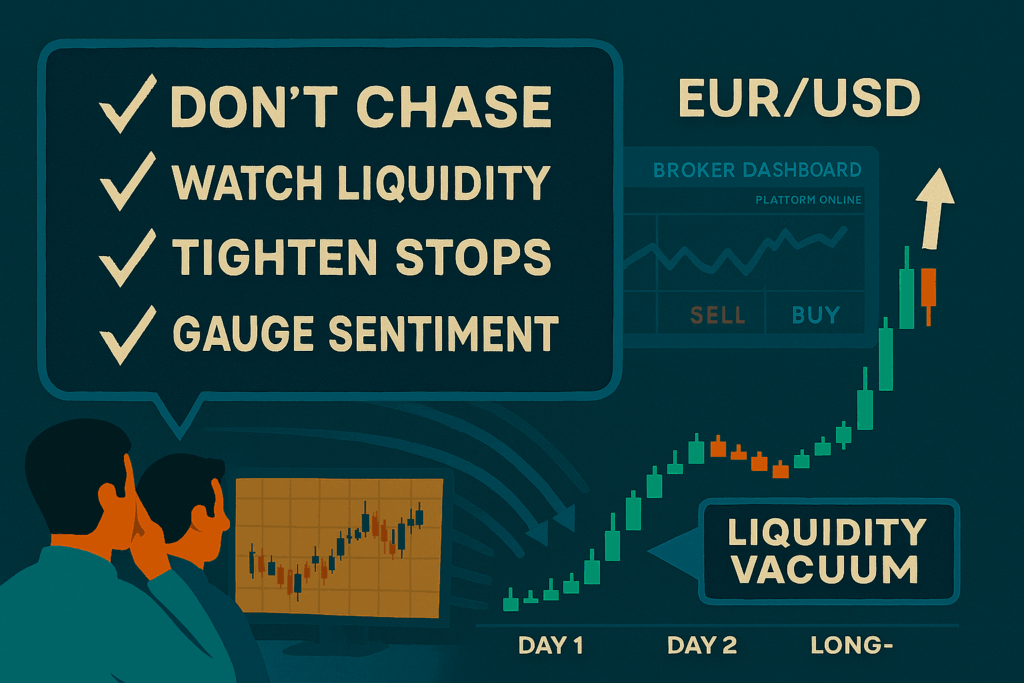
- Don’t Chase Every Cluster – Just because three providers issue the same signal doesn’t guarantee success. Herd behavior often leads to overextended entries.
- Watch Volume & Liquidity – If a cluster forms during thin markets (e.g., Asia session), the effect can be exaggerated but short-lived.
- Prepare for Reversals – Institutions use clustered signals as liquidity traps. Retail traders should tighten stops or scale out once momentum stalls.
- Cluster as a Sentiment Gauge – Rather than blindly following, use clusters to measure where retail sentiment is concentrated and plan around it.
Final Word

Consecutive signal clusters can create short-lived volatility bursts that appear powerful but rarely sustain without institutional backing. Retail traders should view clusters as sentiment amplifiers rather than guarantees of long-term direction. By analyzing how these clusters form and fade, traders can avoid being trapped and even capitalize on the reversal that often follows.